
ARTIFICIAL INTELLIGENCE IN 20026
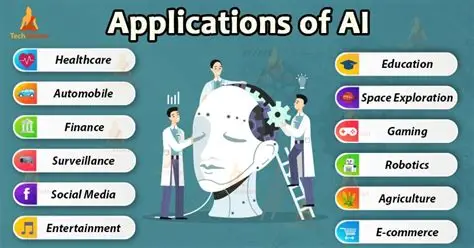
ARTIFICIAL INTELLIGENCE IN 2026 is an attempt to converge computer science, mathematics, and cognitive science into singular units to create machines with human intelligence. These machines help in learning, reasoning, problem-solving, and language understanding. Owing to the varied tasks performed by AI-enabled machines, AI technology has become a landmark element of the technological revolution of the 21st centaury ARTIFICIAL INTELLIGENCE technology has transformed the fields of healthcare, finance, automobile, and streaming services. In healthcare, AI is used for drug discovery and diagnosis. Whereas, in the financial sector, AI is used for risk management and optimisation of trading strategies. On top of that, this technology has led to the development of AI-powered vehicles, which promise efficient and safe transportation. Furthermore, AI is used in recommendation systems on platforms like Netflix and Amazon to provide personalised suggestions based on the behaviour and preferences of users.
However, exemplary technological advancements always come with numerous drawbacks. One of the grave consequences of the large-scale adoption of AI is the fear of job loss. In recent times, automation has left many jobless, especially in the manufacturing sector. Thus, governments and technology companies must ensure that there is a balanced discussion between technological advancements and societal well-being. Also, policymakers must have regular dialogue with ethicists to control the exploitation of citizens’ data by technology companies Nevertheless, AI has opened exciting opportunities for inquisitive minds as it has created exciting jobs in coding, data science, and robotics. Owing to the increased use of AI technology in these arenas, people have the opportunity to improve their critical thinking, creativity, and problem-solving skills. To leverage new opportunities like these, students should start gaining hands-on experience with AI technologies at an ARTIFICIAL INTELLIGENCE
Add Post ‹ luxelooks.online — WordPress
Thus, ARTIFICIAL INTELLIGENCE IN 20026Artificial Intelligence is a revolutionary force that will shape the future of mankind. To harness the maximum benefits of this technology, it is advisable to use it wisely. Any development or innovation in AI technology must be directed towards the betterment of society and aim to protect the privacy of the weakest section of society. AI tools not only power machine-like cognitive abilities but also enhance written communication. An example of this enhancement can be seen in grammar checker tools, which leverage AI to provide instant grammar corrections across languages, including English, French, and German, while ensuring user confidence without any charges
Also Read: 10 Steps on How to Write an Essay in English
ARTIFICIAL INTELLIGENCE
Components ARTIFICIAL INTELLIGENCE IN 2026 is the simulation of human intelligence in machines that are programmed to think, learn, and complete tasks independently. These computers replicate human characteristics such as reasoning, problem-solving, and decision-making, relying on powerful algorithms and massive amounts of data to function efficiently.
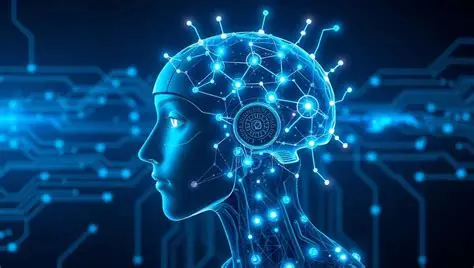
AI encompasses various domains:
- Machine Learning (ML): Enables systems to learn from data and improve performance without explicit programming.
- Computer Vision: Empowers machines to interpret and process visual data from the world.
- Robotics: Focuses on designing intelligent robots capable of performing complex physical tasks.
- Natural Language Processing (NLP): Facilitates interactions between humans and machines through language understanding.
Applications of ARTIFICIAL INTELLIGENCE IN 2026
While ARTIFICIAL INTELLIGENCE IN 20026 is transforming industries with advanced solutions, tools like the Paraphrasing tool can enhance productivity in writing by providing free, full-length reinterpretations without signup hassles. This seamless integration of technology aligns with the evolving landscape influenced by AI, adding significant educational value. AI has become a vital aspect of many sectors.
Table of Contents
- Healthcare: AI helps with disease diagnosis, drug discovery, and personalised treatment strategies. AI-powered tools, such as IBM Watson, are transforming health care.
- Businesses: Businesses use AI for customer service through chatbots, predictive analytics for decision-making, and automation to increase efficiency.
- Transportation: Autonomous vehicles and AI-powered traffic control technologies are transforming urban mobility.
- Education: Artificial intelligence (AI) enables personalised learning experiences by identifying gaps in student knowledge and delivering relevant answers.
- Entertainment: AI-powered recommendation systems on platforms such as Netflix and Spotify deliver user-specific content.
BENIFITS OF ARTIFICIAL INTELLIGENCE
Here are some of the advantages of Artificial Intelligence that cannot be overlooked.
- Efficiency: Artificial intelligence automates repetitive tasks, saving time and resources.
- Accuracy: Machine learning algorithms are frequently better than humans at recognising patterns and predicting outcomes.
- 24/7 Availability: AI systems are capable of operating continually without fatigue.
- Problem-solving: Artificial intelligence solves hard problems in domains such as climate modelling and scientific research.
- Through the external link we can also find the correct way
Challenges of ARTIFICIAL INTELLIGENCE IN 20026
Despite its benefits, AI poses various challenges:
- Job Displacement: Automation may cause unemployment in industries that rely on routine tasks.
- Bias and Inequality: AI algorithms might inherit biases from training data, resulting in unfair outputs.
- Privacy Concerns: The usage of personal data raises questions regarding surveillance and misuse.
- Security Risks: The malicious use of AI in cyberattacks is a big hazard.
Advantages of Artificial Intelligence
ARTIFICIAL INTELLIGENCE IN 2026 offers many benefits to society.
- Reduces human effort
- Works faster and more accurately
- Handles repetitive tasks efficiently
- Improves productivity
- Helps in decision-making
- Reduces human error
- Operates 24/7 without fatigue.
Disadvantages of ARTIFICIAL INTELLIGENCE IN 2026
Despite its benefits, Artificial Intelligence also has some drawbacks.
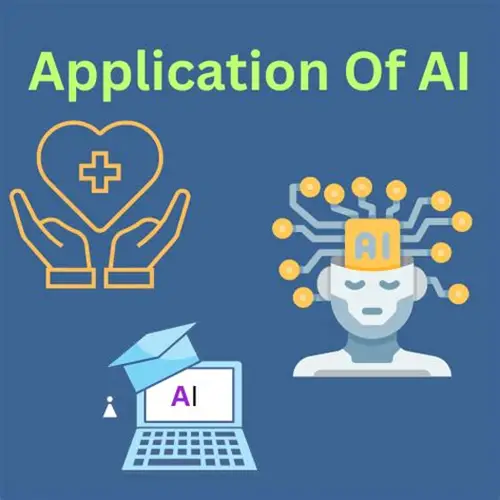
- High development cost
- Risk of job loss due to automation
- Dependence on machines
- Lack of human emotions and creativity
- Ethical and privacy concerns
- Security risks if misused.
The Future of AI
AI’s potential is limitless, with advances in quantum computing, 6G networks, and more realistic virtual realities. However, addressing ethical problems and ensuring responsible AI development is critical. Policymakers and technologists must work together to design policies that promote innovation while protecting societal values.
Benefits of Artificial Intelligence IN 2026
ARTIFICIAL INTELLIGENCE IN 2026 commonly known as AI, is one of the most important technologies of the modern world. It refers to the ability of machines and computer systems to perform tasks that normally require human intelligence. These tasks include learning, problem-solving, decision-making, understanding language, recognizing images, and analyzing information. AI is becoming a part of almost every area of life, including education, healthcare, business, transportation, agriculture, banking, entertainment, and communication. Although AI has some challenges, its benefits are numerous and are helping to make human life easier, faster, and more productive
.
One of the biggest benefits of AI is that it saves time and increases efficiency. AI-powered machines and software can complete many tasks much faster than humans. For example, AI can analyze thousands of documents, process large amounts of data, and provide results within a few seconds. In businesses, AI can automate repetitive tasks such as data entry, customer support, scheduling, and report generation. This allows employees to spend more time on creative and important tasks. As a result, organizations can save time, reduce costs, and improve their overall productivity.
AI is also highly beneficial in the field of healthcare. Doctors and medical professionals use AI to detect diseases and analyze medical reports. AI systems can study medical images such as X-rays, CT scans, and MRI scans to help identify health problems. AI can also assist doctors in finding diseases at an early stage, which can increase the chances of successful treatment. Furthermore, AI is being used to develop new medicines and treatments. It can analyze a large amount of medical information and help researchers discover new solutions more quickly. AI-powered virtual assistants and health applications can also help people monitor their fitness, sleep, heart rate, and other health-related information.
ARTIFICIAL INTELLIGENCE IN 20026 Another important benefit of AI is its contribution to education. AI has made learning more personalized and accessible. Online learning platforms use AI to understand the needs and abilities of students. Based on a student’s performance, AI can suggest suitable lessons, exercises, and learning materials. AI-powered chatbots and virtual tutors can answer questions and explain difficult topics at any time. This is especially useful for students who need extra help outside the classroom. AI can also help teachers by checking assignments, analyzing student performance, and preparing educational content. Therefore, AI is making education more flexible and effective.
Artificial Intelligence has many benefits and is changing the way people live and work. It saves time, increases productivity, improves healthcare and education, supports businesses, enhances transportation, helps farmers, protects financial systems, and provides personalized services. AI can also assist people with disabilities and perform dangerous tasks safely. However, AI should be developed and used responsibly so that its benefits can be enjoyed by everyone. With proper planning, ethical use, and human control, Artificial Intelligence can become a powerful tool for creating a smarter, safer, and more developed future.
AI plays an important role in business and industry as well. Companies use AI to understand customer behavior, predict market trends, and improve their products and services. AI can analyze customer data and identify what people want to buy. This helps businesses create better marketing strategies. Chatbots powered by AI can provide customer service 24 hours a day. They can answer common questions and solve simple problems without human assistance. In industries, AI-powered robots can perform dangerous or difficult tasks, improving workplace safety and efficiency.
The transportation sector has also benefited greatly from AI. AI is used in navigation systems, traffic management, and self-driving vehicles. Applications such as digital maps use AI to find the fastest routes and predict traffic conditions. AI can help reduce traffic accidents by analyzing road conditions and driver behavior. Self-driving vehicles are being developed with the help of AI to make transportation safer and more convenient. AI is also used in airports, railways, and public transportation systems to improve operations and reduce delays.
Agriculture is another field where AI provides many advantages. Farmers can use AI to monitor crops, detect diseases, and predict weather conditions. AI-powered systems can analyze soil quality and help farmers decide when to plant crops or use water and fertilizers. Drones equipped with AI technology can monitor large areas of farmland and identify problems quickly. This helps increase crop production while reducing waste and expenses. AI can therefore support farmers and contribute to food security.
ARTIFICIAL INTELLIGENCE IN 20026 is also useful in banking and finance. Banks use AI to detect fraud and protect customers from financial crimes. AI systems can identify unusual transactions and alert banks about possible fraud. AI is also used to provide personalized financial advice and assess loan applications. Chatbots can answer customer questions and provide banking services at any time. By reducing human errors and improving security, AI makes financial services faster and more reliable.
One of the most common benefits of ARTIFICIAL INTELLIGENCE IN 20026 ARTIFICIAL INTELLIGENCE IN 20026is its ability to provide personalized experiences. Many websites and applications use AI to recommend content according to the interests of users. For example, streaming platforms recommend movies and music, while online shopping websites suggest products based on previous searches and purchases. Social media platforms also use AI to show users content that may interest them. This makes digital services more convenient nd enjoyable can also help people with disabilities. Speech recognition technology can convert spoken words into text, helping people who have difficulty typing. Text-to-speech systems can read written content aloud for people with visual disabilities. AI-powered tools can help people communicate, move around, and perform daily tasks more independently. In this way, AI is contributing to a more inclusive society.
Another major benefit of AI is its ability to work continuously without getting tired. Unlike humans, AI systems can operate 24 hours a day. This is especially useful in areas such as customer service, security monitoring, and industrial production. AI can also perform dangerous tasks in places such as mines, chemical factories, and disaster zones. By sending machines instead of humans into risky environments, AI can help save lives.
Conclusion
ARTIFICIAL INTELLIGENCE IN 20026Artificial intelligence is transforming the way we live and work. Including it into daily life is unavoidable, providing solutions to some of humanity’s most pressing problems. However, careful execution is required to ensure it works as a tool for advancement rather than disturbance. By maintaining a balance between innovation and ethics, AI can be used to create a better future for all of humanity.